
Temperature Control Vape: Stop Burnt Hits for Good
Posted by Chris on
That burnt hit usually happens at the worst time. Your tank still has liquid, the flavour was good a second ago, then suddenly the next pull tastes like singed cotton and hot metal. A lot of adult vapers assume that means the coil is done, the juice is bad, or the device just isn't very good.
Often, it's simpler than that. The coil got hotter than the wick could handle.
That's why so many people get curious about a temperature control vape. Not because they want to turn vaping into a science project, but because they want a smoother draw, steadier flavour, and less chance of that nasty dry hit showing up out of nowhere. If you've been using a popular kit from Vaporesso, Voopoo, Uwell, or another mainstream brand, you've probably seen TC mode in the menu and wondered whether it's useful or just one of those features nobody uses.
That confusion is normal. A lot of temperature control guides are written for hobbyists using rebuildables and specialty wire. They spend pages on advanced setups, but they don't really answer the question most everyday Canadian vapers have. Does TC matter for the gear I own?
It can, but only if your device and coil support it, and only if you set it up properly. That's the part many people miss.
Your Introduction to a Better Vape
You fill your tank, take a few good pulls, and settle in. Then one puff turns sharp, dry, and burnt, even though there is still liquid sitting right there. That is the moment many adult vapers start looking at the menu on their mod and wondering if temperature control vaping is useful, or just another feature they will never touch.
For everyday devices, that is a fair question.
A lot of TC guides are written for hobbyists building their own coils at a desk full of wire and tools. Meanwhile, plenty of Canadian vapers are using mainstream kits from Vaporesso, Voopoo, or Uwell and just want better flavour, fewer burnt surprises, and settings that make sense on the device they already own. That practical gap is what trips people up.
Temperature control involves keeping coil heat from running too far ahead of the wick. A coil works like a stove burner. If the cotton is feeding e-liquid properly, the vape tastes normal. If the wick starts falling behind, the coil can heat dry spots too fast, and the flavour goes from rich to scorched in a second. TC mode is built to catch that rise and pull power back before the puff gets ugly.
The benefit is simple. If your device supports TC and your coil is compatible, you can get a steadier vape from the same liquid and tank you already enjoy.
Why everyday vapers get mixed messages
Part of the confusion comes from how uneven the advice is. Some articles make TC sound automatic and easy on any mod. Others make it sound like a niche feature for advanced rebuildable setups only. In real use, both views miss something important. TC can be very helpful, but only on devices and coil materials that are designed for it.
That is why a mainstream kit owner often feels stuck between expert tutorials and vague product menus. A helpful overview from ECBlend on TC compatibility and setup limits points out the same issue. Temperature control depends on specific coil types, and some popular retail devices barely support it, or do not support it in a way that makes setup simple.
So if you have opened the menu on your mod, seen NI, SS, or TI, and thought, "Do I even need this?", you are already asking the right question.
A better vape is not always a hotter vape. It is often a more consistent one.
Why this matters for Canadian vapers
Canadian shoppers also look at TC a little differently than the hobby forums do. In a market where product options, device styles, and nicotine strengths are more tightly limited, small improvements in flavour consistency and comfort can make a bigger difference in daily use.
That does not make temperature control required. It makes it a useful option to understand, especially if you already own a mod that includes it and you want fewer harsh surprises from your tank.
What Is Temperature Control Vaping
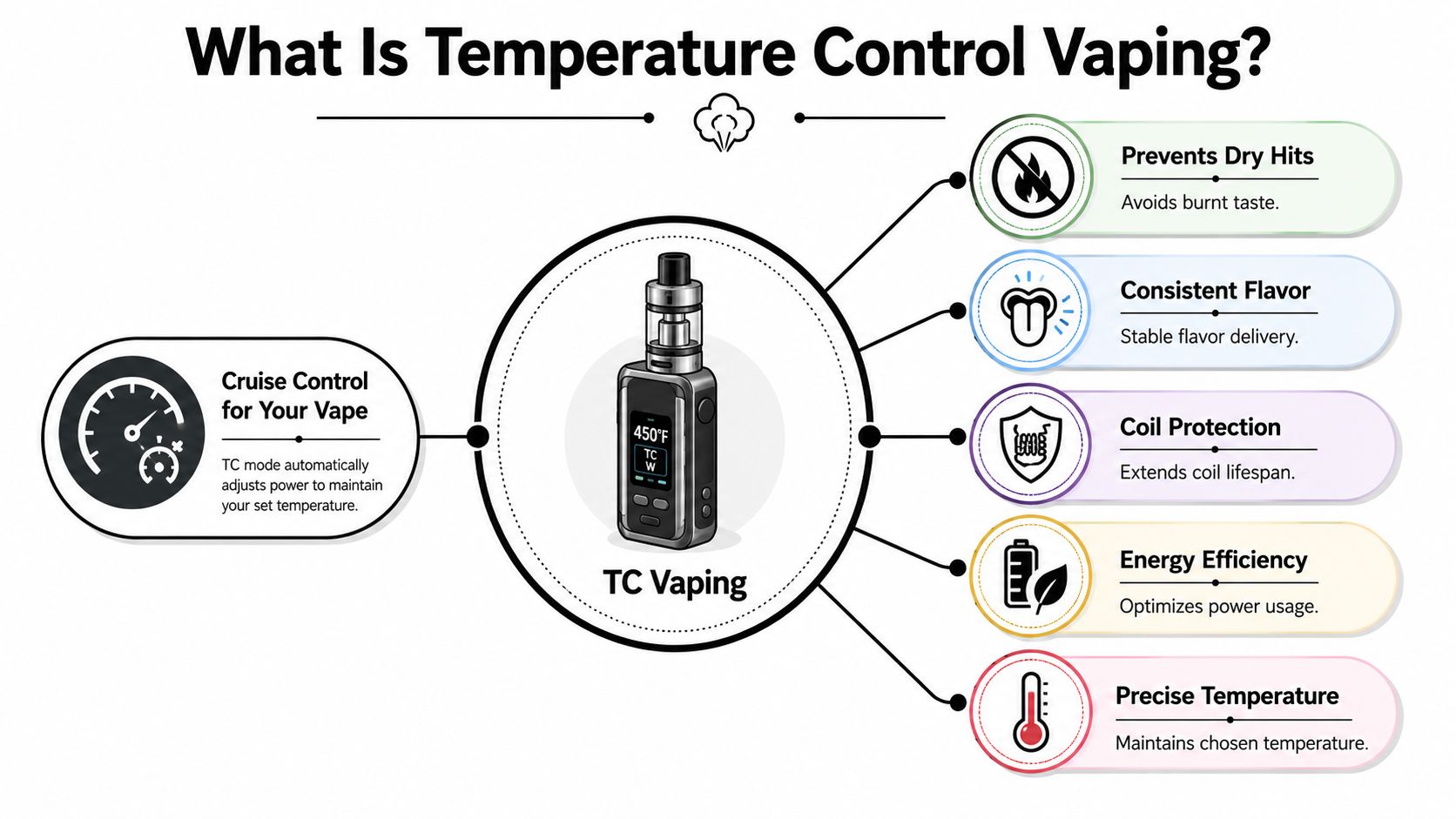
Temperature control vaping means your mod is set to cap how hot the coil gets, instead of only telling it how much power to send.
In regular wattage mode, the device keeps pushing the wattage you selected. The coil can run hotter or cooler depending on the wire, the wick, how full the tank is, and how long you hold the fire button. In TC mode, you choose a temperature limit. The mod then keeps adjusting power so the coil stays close to that ceiling rather than climbing freely.
What that changes in real use
Here is the easiest way to spot the benefit. You take a puff from a well-soaked tank and it tastes great. A few pulls later, the wick is a bit drier, the coil is hotter, and the flavour starts getting sharp. TC mode is built to smooth out that shift.
For everyday kit users, that can mean:
- Fewer dry-hit moments because the mod can reduce power as the coil approaches your set limit
- More consistent flavour across a full tank, especially during longer sessions
- Less chance of overheating the wick when e-liquid is running low
- A setup that feels more predictable once you find a temperature that suits your tank and coil
That predictability is the part many shop customers care about most.
It is also where TC starts making sense for people using popular mainstream devices, not just advanced rebuildable setups. If you own a mod from Vaporesso, Voopoo, or another brand with TC options in the menu, the feature is there to help manage heat more carefully. Whether it works well depends on the coil material and the device's TC support, but the goal is simple. Keep the vape from getting hotter than you wanted.
Why flavour consistency matters
A temperature control vape does not make e-liquid stronger. The key difference is how steadily your device heats the coil, which changes the flavour, warmth, and feel of each puff.
That is why some people describe TC as a "smoother" vape even when they are using the same tank and the same juice. The flavour notes stay closer to the first puff instead of drifting into that overheated taste you sometimes get near the end of a chain-vape session.
If terms like resistance and coil metal still feel a bit fuzzy, our guide on ohms and vape coil basics helps make the next part much easier to follow.
| Mode | You control | Device behaviour |
|---|---|---|
| Wattage mode | Power | Coil temperature can rise and fall more freely |
| TC mode | Temperature limit | Device keeps adjusting power to stay near that ceiling |
For many Canadian vapers, that is the primary appeal. TC mode is less about chasing bigger clouds and more about getting a steadier, better-tasting puff from the device you already own.
How Temperature Control Actually Works
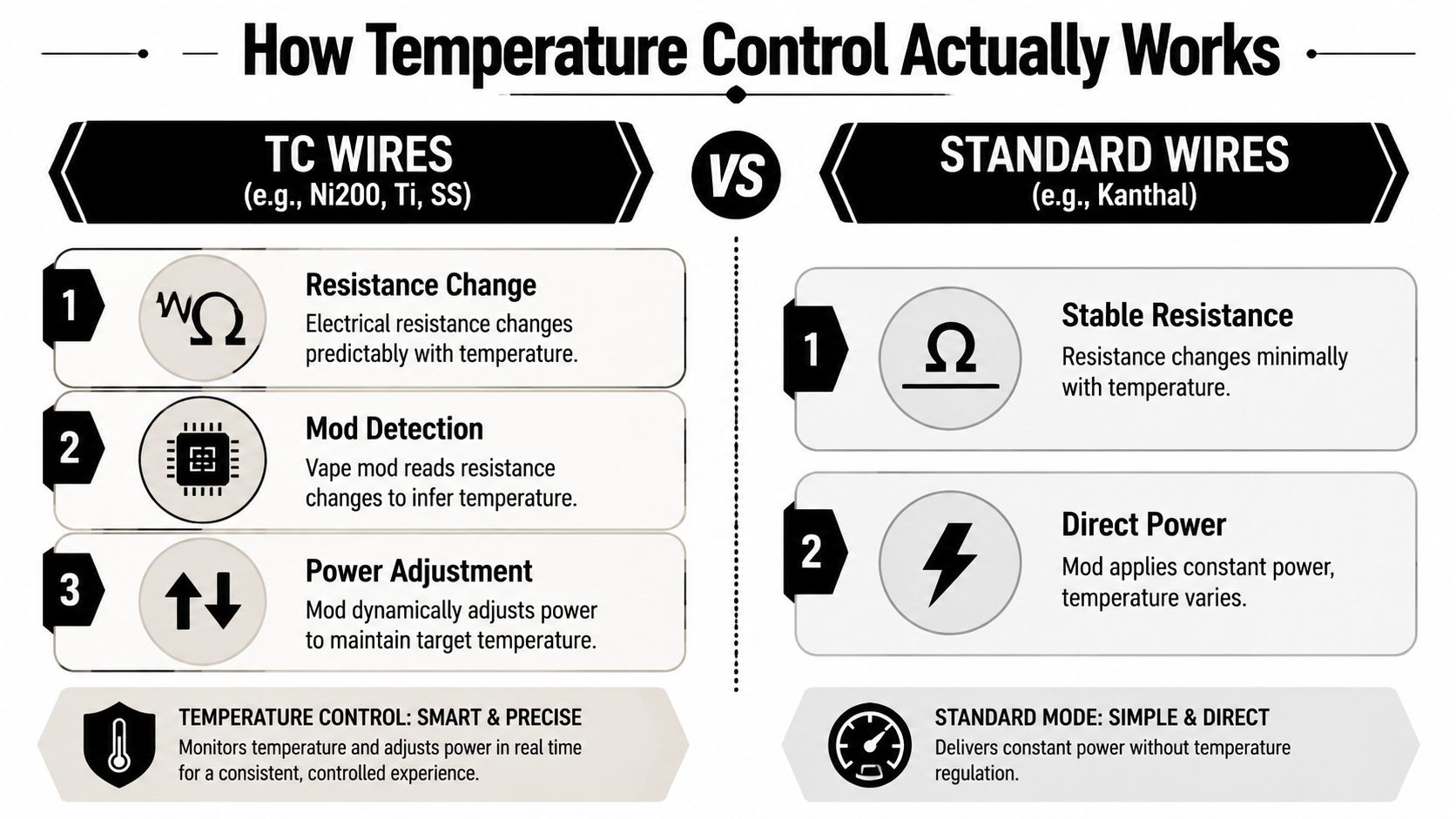
Set your mod to 220°C, take a puff, and the device starts making tiny corrections in real time. That is the core idea. A temperature control vape keeps checking the coil while you inhale, then trims power if the coil is getting hotter than the limit you chose.
A mod cannot place a thermometer on the coil, so it uses resistance as a clue. Certain metals change resistance in a steady, predictable way as they heat up. The chipset reads that change, estimates the coil temperature, and responds fast enough to keep the vape from running away into that scorched, cotton-burnt zone.
The simple version of the science
A good way to picture it is a car climbing a hill with cruise control on. The speed starts to drift, the system notices, and it adjusts before the car gets too far off target. TC mode does the same kind of correction with heat.
That is why TC can feel smoother on mainstream mods from Vaporesso, Voopoo, or other brands that include the feature. The device is not firing at one fixed power level and hoping for the best. It keeps nudging the power up or down based on what the coil is doing from one moment to the next.
If resistance still feels abstract, this guide to Ohm's law and vape coil basics makes the relationship between wire, power, and coil behaviour much easier to follow.
Why some coils work and others do not
TC mode depends on the wire giving the mod a clear signal. Some metals do that well. Some barely do it at all.
Here is the practical breakdown for everyday use:
- Nickel Ni200 changes resistance very clearly with heat, so it was one of the first materials widely used for TC.
- Titanium Ti also works in TC mode, but it needs the right setting and careful use on a compatible mod.
- Stainless Steel SS is the option many regular vapers find easiest because it can often be used in both TC mode and regular wattage mode.
- Kanthal is common in standard wattage coils, but its resistance change is too small for reliable temperature tracking on most devices.
This point matters a lot for Canadian vapers using off-the-shelf kits rather than rebuildables. A mod may offer TC in the menu, but that does not mean every replacement coil for that tank or pod is suitable for it. The feature only works properly when the coil material gives the chipset the kind of feedback it needs.
Where TCR fits in
You may also see TCR, short for temperature coefficient of resistance. That term sounds more technical than it needs to be.
TCR is the rate at which a metal's resistance changes as it gets hotter. Each wire type has its own rate. Your mod uses that information to turn a resistance change into a temperature estimate.
On some devices, the preset modes handle this for you. You choose SS, Ni, or Ti, and the chip loads the expected value in the background. On others, especially more advanced mods, you can enter a TCR value manually for finer control.
For users of popular Wii Vape devices and tanks, the practical lesson is simple. Start by checking the coil material. If the wire is compatible and the resistance is read correctly while the coil is cool, TC mode has a much better chance of giving you steady flavour and fewer nasty dry hits.
A Practical Guide to Setting Up TC Mode
A proper TC setup is less about pressing the right button and more about getting the starting conditions right. When people say temperature control “doesn't work,” the problem is often a rushed setup, the wrong coil, or a resistance reading taken when the coil is still warm.
Start with the coil, not the menu
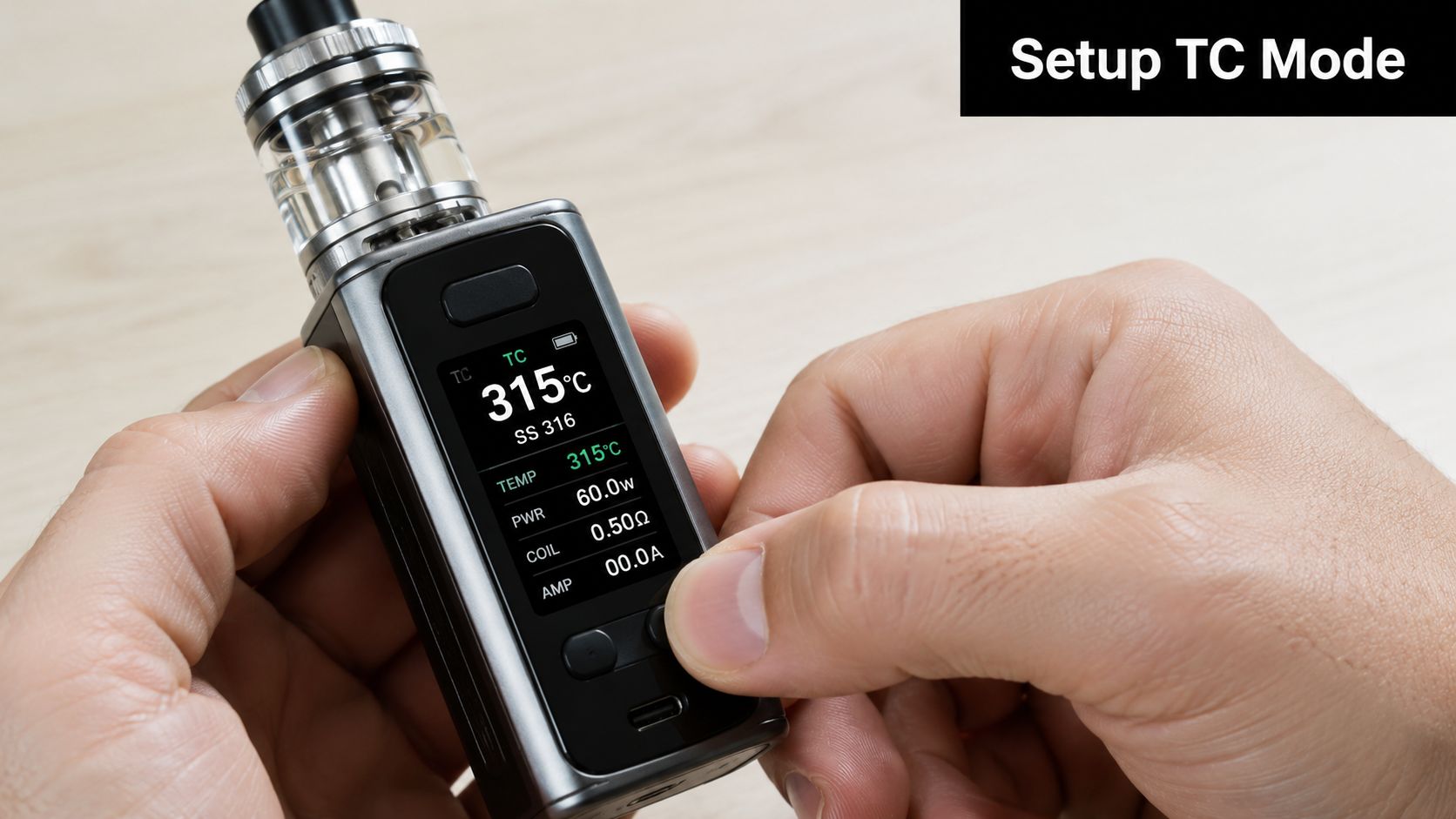
Before you even scroll into your device settings, check what coil you're using. TC mode needs a compatible material such as nickel, titanium, or stainless steel. If your tank is using a standard wattage coil, switching the mod into TC won't magically make it a temperature control setup.
This is why some newer products can be confusing. A device may include TC mode in the chipset, but the coil options sold for it may be aimed mostly at regular wattage vaping. If you're using a pod device or a mainstream kit, compatibility matters more than the feature list printed on the box.
The setup steps that actually matter
According to this practical temperature control setup guide from Vaporesso, manufacturer guidance converges on a working TC range of about 200°C to 250°C (392°F to 482°F), with the resistance needing to be locked at room temperature for accurate control. The same guidance recommends starting at the coil's lowest recommended wattage and then fine-tuning temperature upward to balance vapour density, flavour, and coil longevity.
Use that advice in this order:
-
Install and prime the coil
Saturate the wick properly and fill the tank or pod. -
Let the device cool to room temperature
This is the step people skip. Don't take a few puffs and then try to lock resistance. If the coil is warm, the baseline reading will be off. -
Set the mod to the correct TC material
Choose Ni, Ti, or SS based on the coil you installed. -
Lock the resistance
This tells the device, “This is the coil's cold starting point.” -
Set a modest wattage
Start near the lower end of the coil's recommendation so the ramp-up stays controlled. -
Choose an initial temperature
Begin in the lower part of the working range, then adjust upward gradually if needed.
Practical rule: If the coil wasn't room temperature when you locked resistance, start over. That one mistake causes a huge share of TC headaches.
A quick example with a mainstream mod
Say you've got a TC-capable kit from a major brand and a stainless steel coil option that supports temperature mode. You install the coil, prime it, fill the tank, and leave the device alone long enough to cool fully. Then you enter SS mode, lock the resistance, choose a conservative wattage, and start at a moderate temperature.
That's a far better first try than cranking the temperature high and guessing.
If you use a Voopoo kit and want to get more comfortable with the menu style and device logic, this Voopoo Drag X guide is useful background because it helps you understand how regulated devices from mainstream brands handle settings.
Watch a setup in action
Seeing the button flow often makes TC click faster than reading about it:
What new users usually get wrong
A short checklist helps here:
- Wrong coil material means the mod can't read temperature properly.
- Warm resistance lock gives the chipset bad starting information.
- Too much wattage can make the vape feel jumpy even in TC mode.
- Expecting every pod device to support TC well leads to disappointment, because many popular everyday systems aren't built around it.
Once the setup is right, TC usually feels less dramatic than people expect. That's a good sign. It should feel smooth, predictable, and boring in the best possible way.
Finding Your Perfect Temperature Range
The best temperature control vape setting isn't a single magic number. It's the point where flavour, warmth, and coil comfort line up for the way you vape.
Some people want a cooler draw that keeps fruit or dessert notes crisp. Others want a warmer, denser puff that feels more saturated. TC mode lets you hunt for that sweet spot without letting the coil run away.
A sensible range to explore
A practical working range often starts around 200°C to 250°C (392°F to 482°F), as noted earlier from manufacturer guidance. Inside that span, small adjustments can change the feel more than many people expect.
The useful mindset is not “What is the best temperature?”
It's “What do I want more of, and what trade-off am I okay with?”
What changes as you go up
Guidance collected in this discussion of temperature control settings and maintenance trade-offs suggests low-to-medium settings are used for better flavour and gentler vapour, while higher settings can increase extraction but also harshness and byproduct risk near the upper end of the range.
That lines up with what many shop staff see in real life:
| Temperature direction | What you'll usually notice |
|---|---|
| Lower | Cooler vapour, softer throat feel, clearer flavour detail |
| Middle | Balanced warmth, fuller body, steady all-round performance |
| Higher | Warmer vapour, stronger extraction, more chance of harshness |
A good TC setting should make you forget about the device and notice the flavour instead.
Match the setting to the liquid and hardware
A bright fruit blend and a rich custard won't always shine at the same temperature. The same goes for different tanks, airflow styles, and coil builds. If you're curious about how wick material and coil builds shape the final result, this guide to wicks and wires gives useful context.
Try this simple approach:
- For flavour chasing, begin lower and take a few steady puffs before adjusting.
- For a warmer vape, move up in small steps instead of making a big jump.
- For coil preservation, stop climbing once the vape feels right. More heat isn't always better.
The right setting is the one that keeps the flavour where you want it and the wick out of trouble.
TC Mode vs Wattage Mode Which Is Better
A lot of Canadian vapers ask this in the shop after buying a kit from Vaporesso, Uwell, or Voopoo. They see TC mode in the menu, try wattage mode because it feels familiar, and wonder if they are missing out on better flavour or a smoother vape.
The best mode depends on what problem you want to solve.
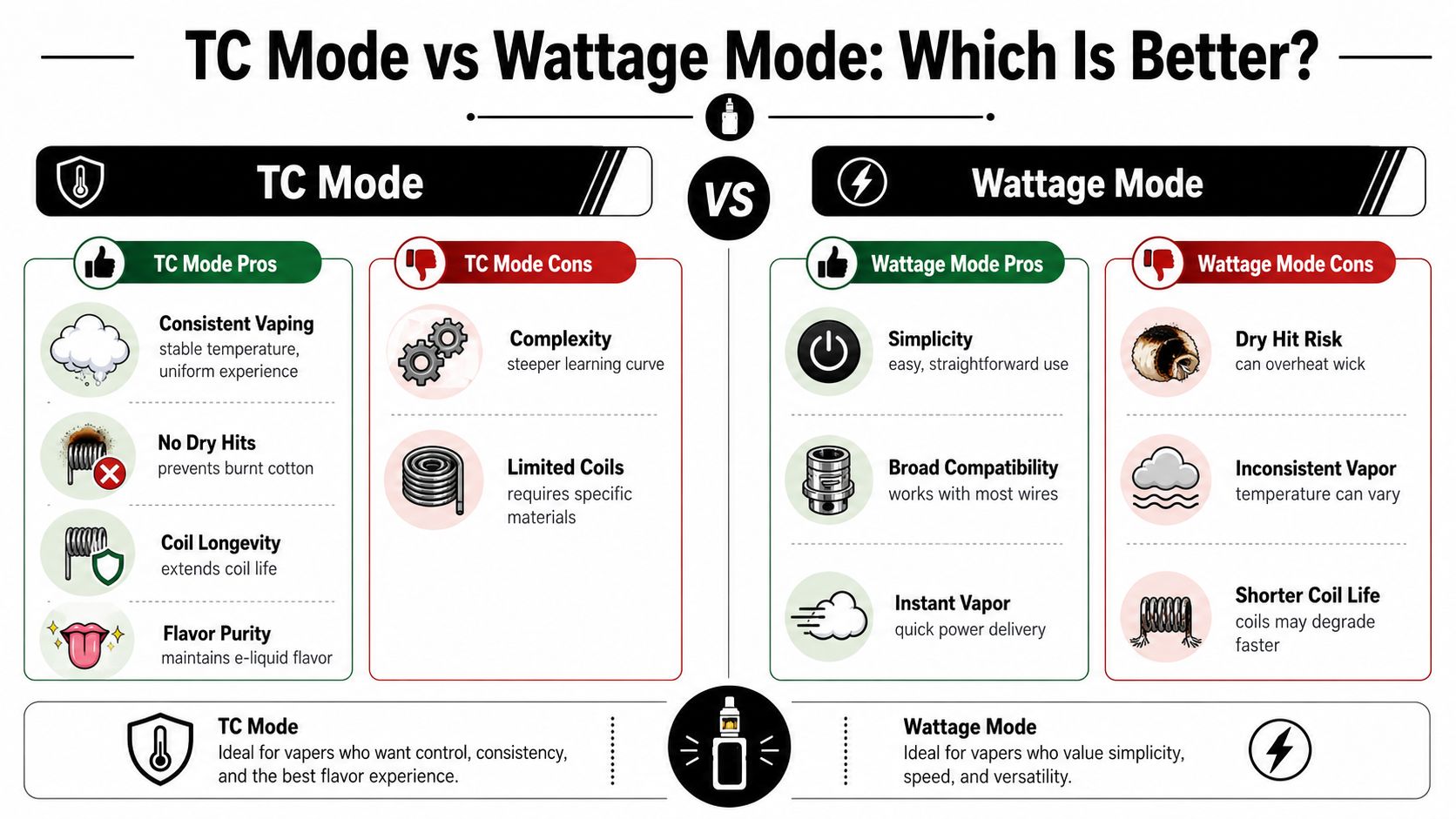
Wattage mode is the easier starting point. You set the power, take a puff, and adjust if needed. It works with far more coil types, which is why it stays popular on everyday devices and starter-friendly kits.
TC mode is more like cruise control in a car. Instead of just sending power and hoping the coil behaves, the mod keeps checking the coil and trims power as the coil approaches your chosen temperature. That helps prevent the sharp, burnt edge that can show up when a wick starts running dry.
The quick head-to-head
| If you care most about... | TC mode | Wattage mode |
|---|---|---|
| Ease of use | Takes more setup | Simpler |
| Coil compatibility | Works only with certain materials | Works with many common coils |
| Avoiding dry hits | Better safety net | Depends more on user timing |
| Consistent puff warmth | More consistent | Can shift from puff to puff |
| Fast, no-fuss vaping | Less convenient | Better fit |
Who usually prefers each one
TC mode often makes sense for vapers who like a steady, repeatable puff and get annoyed by surprise heat spikes. It can be a great fit if you already own a regulated mod that supports stainless steel, nickel, or titanium coils and you do not mind spending a few minutes setting things properly.
Wattage mode usually suits vapers who want quick setup, broad coil choice, and fewer menu decisions. If you use pods, stock coils with no clear TC compatibility, or devices where wattage is the main feature, wattage mode is often the practical choice.
How to decide
Start with your actual device, not with an expert forum build.
If your Uwell pod kit or Voopoo device mainly uses standard plug-and-play coils and the manual barely mentions TC, wattage mode is probably the mode you will use most. If your Vaporesso or other regulated mod clearly offers TC support for a compatible coil material, TC can be worth trying, especially if you care about flavour consistency and want extra protection against nasty dry hits.
That is the gap many advanced guides miss. They often focus on rebuildables and custom wire types, while everyday vapers in Canada are using common retail kits. For those setups, wattage mode is not a lesser choice. It is often the correct one. TC mode becomes the better option when your hardware supports it properly and you want more control over how warm and forgiving each puff feels.
Troubleshooting Common Temperature Control Issues
TC problems usually come down to a handful of repeat mistakes. The good news is that most of them are easy to fix once you know what the mod is reacting to.
When the vape feels weak
If the vapour feels thin or unsatisfying, the most common cause is a temperature set too low for your style, or a wattage setting that's too timid to ramp the coil properly. Raise the temperature in small steps. If your device allows wattage adjustment within TC mode, nudge that up carefully too.
A weak vape can also mean the coil isn't a great TC performer for the tank you're using.
When resistance jumps around
If the ohms reading keeps changing, check the basics first:
- Tighten the coil and tank connections so the mod gets a stable reading
- Let the device cool fully before locking resistance again
- Inspect the coil type to confirm it is made for TC mode
If the baseline isn't stable, the temperature estimate won't be stable either.
When the device says Temp Protection
That message often worries new users, but it usually means the feature is doing its job. The mod is limiting power because the coil has reached the set temperature. If it happens immediately and constantly, the usual causes are an incorrect resistance lock, a coil that isn't wicking well, or a temperature setting that's too low for the way you draw.
If TC feels erratic, reset the setup from the beginning instead of chasing the problem one puff at a time.
When TC keeps kicking you back to normal mode
That often points to compatibility. Some devices are picky about coil material detection, and some coils aren't designed for reliable temperature control use. If the mod can't confidently read the coil the way it expects, it may revert or behave inconsistently.
At that point, don't force it. Use wattage mode if that coil is better suited to regular power, or switch to a clearly compatible TC coil if your tank supports one.
If you want help finding a TC-capable mod, compatible coils, or a simple starter setup that matches how you vape, Wii Vape makes it easy for adult vapers in Toronto and the GTA to compare devices, pods, tanks, and accessories without the guesswork.